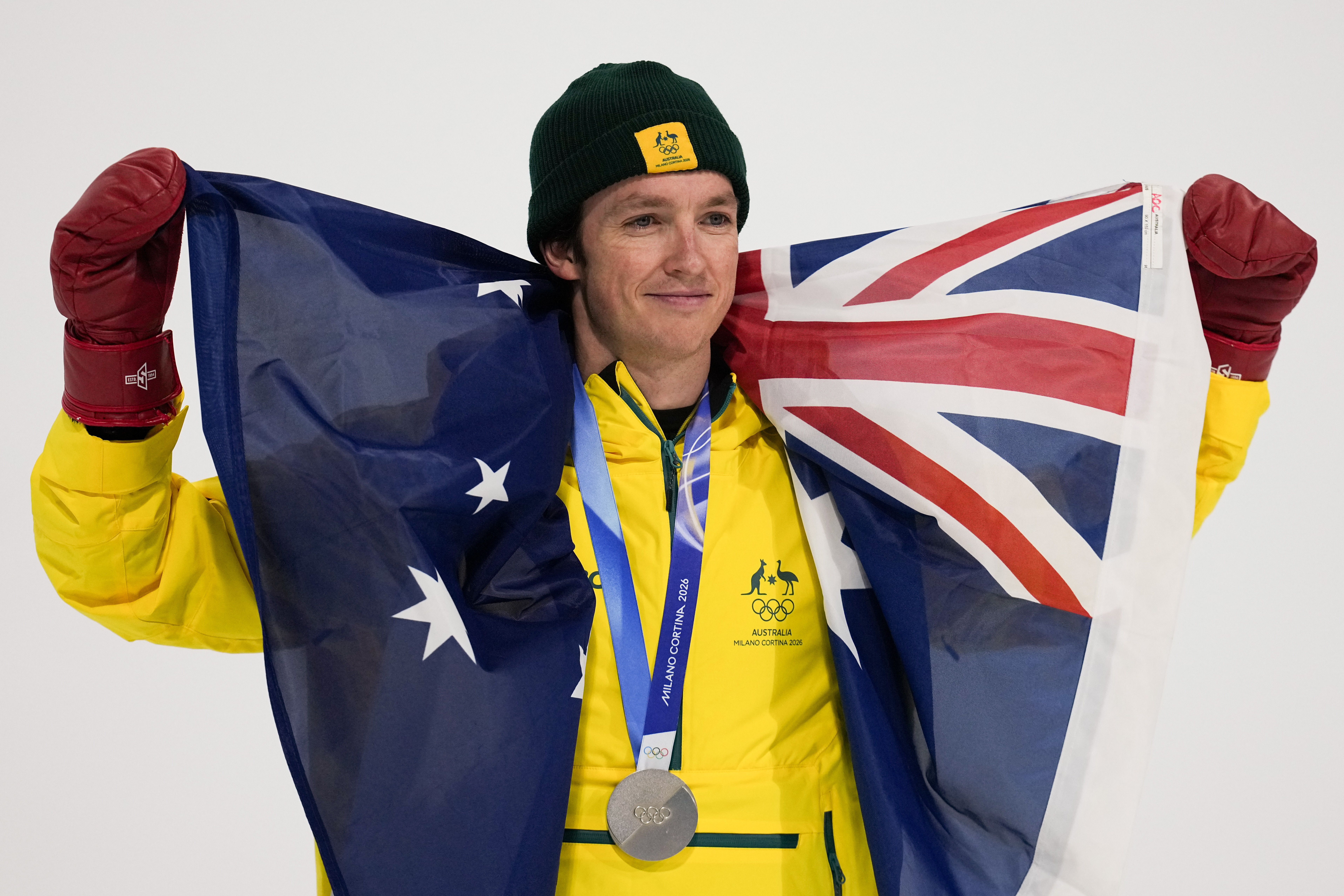
LIVIGNO, Italy — If you’ve been following freestyle skiing and snowboarding at the Winter Olympics, you’ve probably noticed the blue flag with a Union Jack in the upper lefthand corner and a Southern Cross on the right side popping up pretty frequently on the leaderboard.
And you may have wondered, “What’s Australia doing there? Do they even have snow Down Under?”
It’s a reasonable question. Yes, Australia does have winter, a mountain range called the Australian Alps and even a handful of ski resorts in New South Wales and Victoria.
But generally, Australia is known on the international sporting stage for its swimmers, tennis players, golfers, basketball players, surfers and, of course, its beloved cricketeers and Australian Rules footballers.
In other words, it’s a summer sports country.
With Matt Graham’s bronze medal Sunday in men’s dual moguls, however, Australia has already clinched its best-ever Winter Olympics with five medals including golds in men’s moguls, women’s dual moguls and women’s snowboard cross. There’s a good chance the Aussies will add more hardware this week.
And it’s not an accident.
“It’s been a long time coming,” Graham said. “This is my fourth Olympic Games. In Sochi (2014), we were a very young team and you could feel the potential at that point in time. Guys laid it out and showed us what was possible and a lot of us are still here. We were a very young and hungry team at that point in time and the success since then has bred the belief in the younger generation.”
It’s also the result of pinpointed effort and the kind of ingenuity that has lifted Australia’s athletes to prominence in a variety of other sports.
“We have our own ways of doing things, where it inspires one another, which I think is super special to have,” said Josie Baff, who won the gold in women’s snowboard cross.
First, let’s rewind back to 1976. The Olympics were in transition from the fully amateur model to the more professionalized version we know today. In many ways, they were an extension of the arms race between the U.S. and Soviet Union — and both superpowers treated them as such with the infrastructure they built to rack up medals.
At the Montreal Games that summer, Australia failed to win a gold medal for the first time since 1936. It was considered a national embarrassment, and it put a spotlight on how poorly organized the Aussies’ Olympic effort had been.
That led directly to a government-funded effort to launch the Australian Institute of Sport, which then-Prime Minister Malcolm Fraser inaugurated in Canberra on Australia Day in 1981.
It is now considered among the best in the world at identifying and developing talent in a wide variety of Olympic sports, with world-class facilities and staff doing cutting-edge work in sports science. If there’s an Aussie athlete you know, odds are they spent time in the AIS program.
Australia is now always a factor at the Summer Olympics. In Paris two years ago, they won a record 18 gold medals and 53 overall, which was only topped by the 58 they won as hosts in Sydney in 2000.
But the Winter Games are a different beast for Australia for obvious reasons: There isn’t that much winter. Though there are five major ski areas in the country, they are not as world-renowned as the slopes in New Zealand, for instance, because the elevation isn’t as high and the snowfall isn’t as consistent (climate change hasn’t helped).
There’s also the distance element. Even if an Australian athlete does find their way to a winter sports career, it’s a long way to Europe and North America where most of the World Cup events take place. So it’s a lot to ask from the start.
In 1998, the Australian Olympic Committee established the Olympic Winter Institute of Australia as kind of an offshoot of the AIS to boost hopes of winning medals, with most of the focus going to action sports (freeski and snowboarding) along with sliding and speed skating where they’d have a better chance to compete.
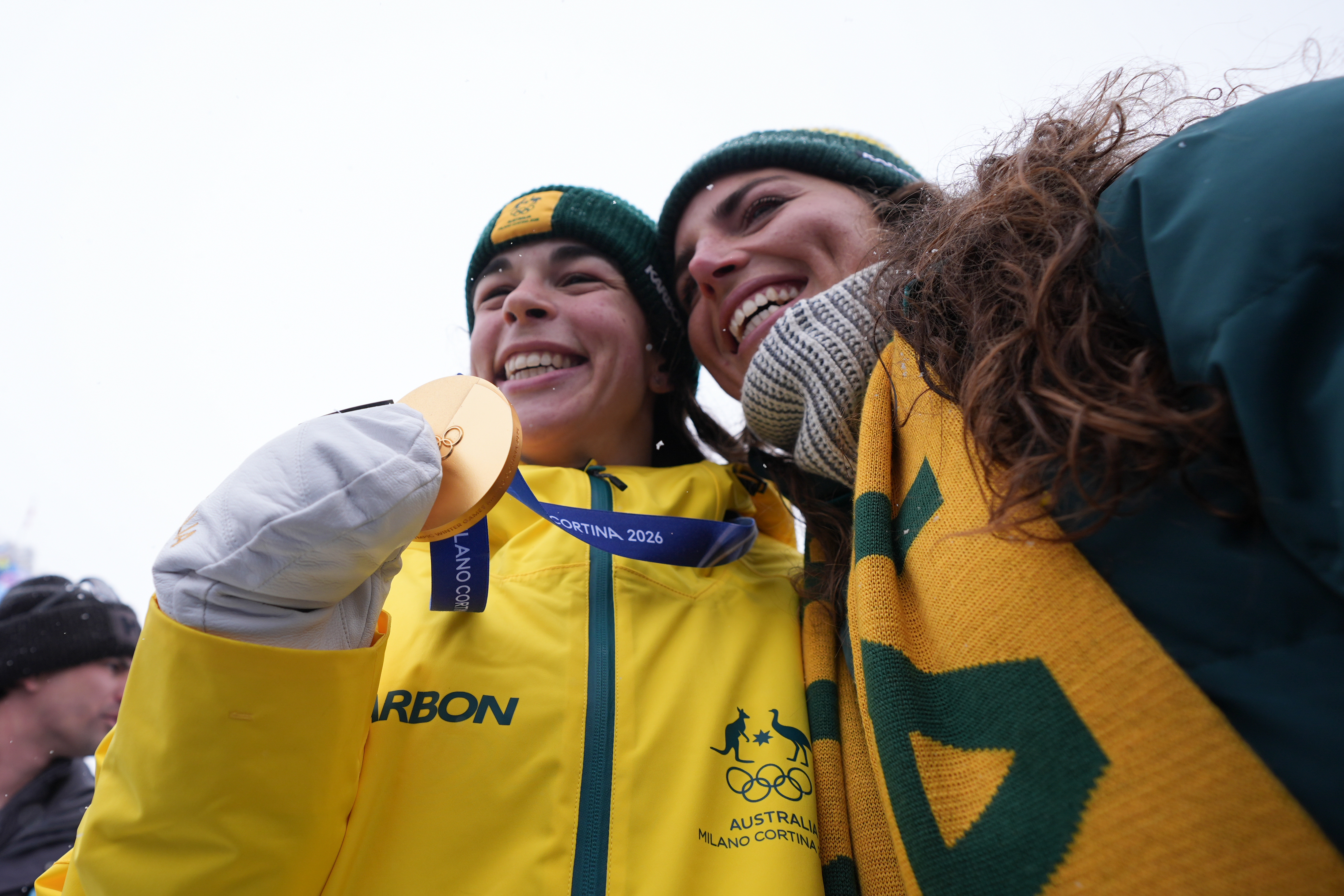
As top-ranked women’s moguls skier Jakara Anthony said after winning her gold medal in duals, it has opened the door to investment within the country to build an Olympic infrastructure at home.
“Despite popular belief, we have some great training facilities in Australia,” she said. “And as we’ve had our prior successes, that’s allowed us to get more and more support to get more and more training facilities. We have fantastic mogul courses at Mt. Buller and Mt. Parisher. We have the new water ramp at the Geoff Henke training center (near Brisbane) and a lot of that is thanks to the continued support from the minister of sport for giving us more opportunities to produce more successful athletes.”
The AIS also had the foresight in 2011 to open a European base roughly 70 miles from Milan in Gavirate as part of a reciprocal training agreement with Italy. Close to the Swiss border and Lake Lugano, it also happens to be easily accessible to many of the areas where these Olympics are taking place, although at the time it opened Milan Cortina had not been awarded the Games.
“It was a strategic vision because we knew that Australian athletes, one of the biggest troubles for them was the tyranny of distance of traveling,” Fiona de Jong, the director of that facility, told The Associated Press. “A 24-hour flight to Europe from Australia means that you can’t do that time and time again if you’re trying to compete at the highest level. It was our answer to our unique problem as a sporting country.”
It’s certainly paying off for the Aussies at the moment. And as word spreads back home, sparking more interest in these sports, that success is likely going to compound in the future.
“I'm really excited to see all these young kids coming through,” Anthony said. “They've got all these opportunities that were nowhere near what I had coming through when I was a kid. What they're going to be able to do with that, I think we're just going to see Australia reach new heights at every Games now. I hope so, anyway.”